Training & skills
Cross-Training in Manufacturing: What It Is and Why It Matters
· Updated · 5 min read
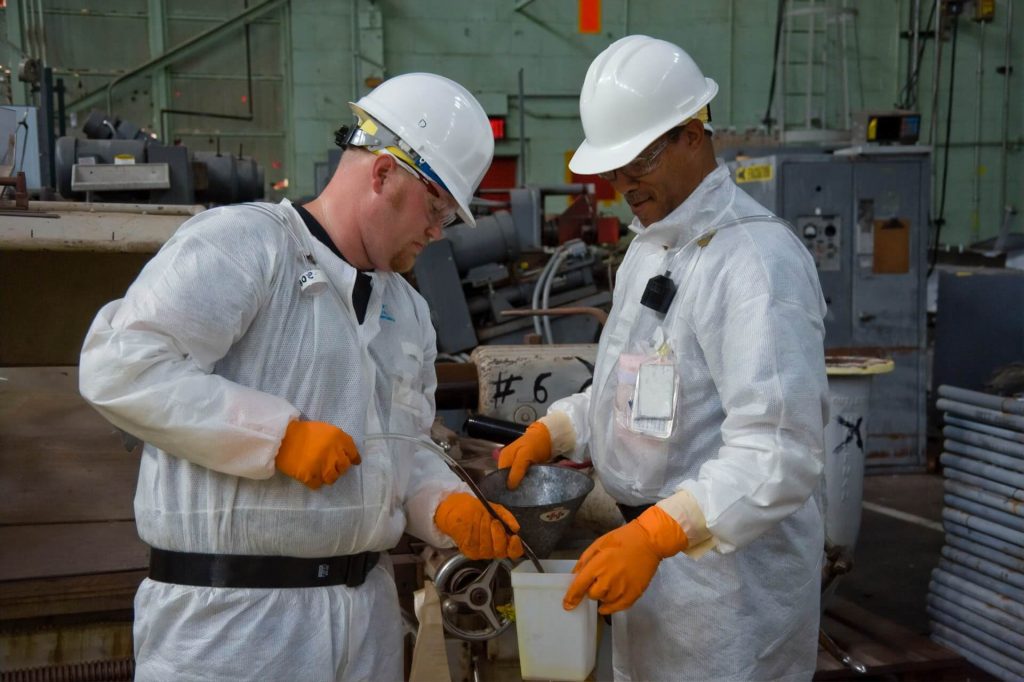
Cross-training in business operations, also known as multiskilling, involves training employees for a flexible response to changing production schedules. Cross-training simply aims to build the skills of everyone in the company. This way everyone better understands exactly what it takes to run the business. The idea is to empower employees to provide support from within the company instead of outsourcing or overloading one group of employees during hectic times.
Cross-training has been closely linked to cellular manufacturing. A close partner of cross-training is job rotation. That is, for a multi-skilled employee to maintain skill levels, it is necessary for that employee periodically to rotate among jobs calling for those skills. It also needs to be often enough that skills do not deteriorate.
Benefits of cross-training in manufacturing
While most of us appreciate a certain level of predictability in our work, the days of doing one simple task from nine to five are nearly a thing of the past. Of course, at an organizational level, having a cross-trained workforce opens doors as well. Here are some key benefits manufacturers enjoy after embracing cross-training for their employees.
Scheduling flexibility
With jobs often coming with tight deadlines, a cross-trained workforce gives you greater choice when it comes to scheduling. And with a schedule that doesn't overburden one or more employees, you also help prevent worker burnout. This will leave you with a healthier, happier workforce and reduced absenteeism.
Process improvements
With siloed employees who work separately from each other, it's often next to impossible to envision process improvements. With a cross-trained workforce that's encouraged to share ideas on how to eliminate waste and increase efficiency, process improvements are far more easily identified and achieved.
Worker engagement
When employees see that their skills are growing and that they're contributing to the company's success with more than one responsibility, they feel part of the bigger picture. And when worker engagement increases, so do your employee retention rates, which goes a long way in helping your organization remain competitive in the labor market.
Improved service
When your production line grinds to a halt because the one person you need to perform a task is working on another project, your services suffer. On the other hand, when you have multiple skilled employees who are capable of many tasks, you're far more prepared to deliver better service to your customers.
Succession planning
As members of your enterprise learn from each other, you also become far better informed about which employees are most prepared to move into roles carrying more responsibility. This means, by cross-training, you're also gaining an awareness that's crucial to strategic succession planning.
Are there any disadvantages to cross-training?
Some employees may view cross-training as an added responsibility with no added pay. It's important to make sure that while leveraging each employee's strengths you balance their workload as much as possible.
Sure, you want to get the highest level of productivity out of your employees while still protecting your bottom line, but the risk of burnout is high when you add too much, too fast. You want employees to know that you value their abilities, not that you think of them as beasts of burden.
Another potential risk is building a company filled with generalists. These are employees that know a little bit about a lot of things, but not too much about one. While this can be very helpful to fill in gaps when an employee is out sick (especially in a small company), you run the risk of appearing to be a mile wide and an inch deep in terms of expertise in your field.
Types of training that support cross-training
Cross-training rarely happens in one session. It usually combines three types of training.
Induction training
Induction training, or onboarding, introduces new employees, contractors and site visitors to the site so they can work safely and in line with company procedures. It covers safety rules, working hours, the products made, the main production methods and quality expectations. It is the foundation that later job-specific training builds on.
On-the-job training
On-the-job training (OJT) teaches the skills for a specific job in the place where the job is done, using the real tools, machines and documents. There is no gap between the training environment and the workplace, so what is learned transfers directly. It can happen at the actual workstation during normal work, or at a dedicated training station. Most cross-training is on-the-job training: an operator learns a second or third station from someone who already does it well, supported by clear instructions they can return to.
Refresher training
Refresher training is for people who are already qualified. It updates their skills when a standard or process changes, and checks that skills they rarely use have not been lost. For cross-trained employees this matters most, because a skill used once a month fades faster than one used every day.
Get started with cross-training by getting your knowledge documentation in order
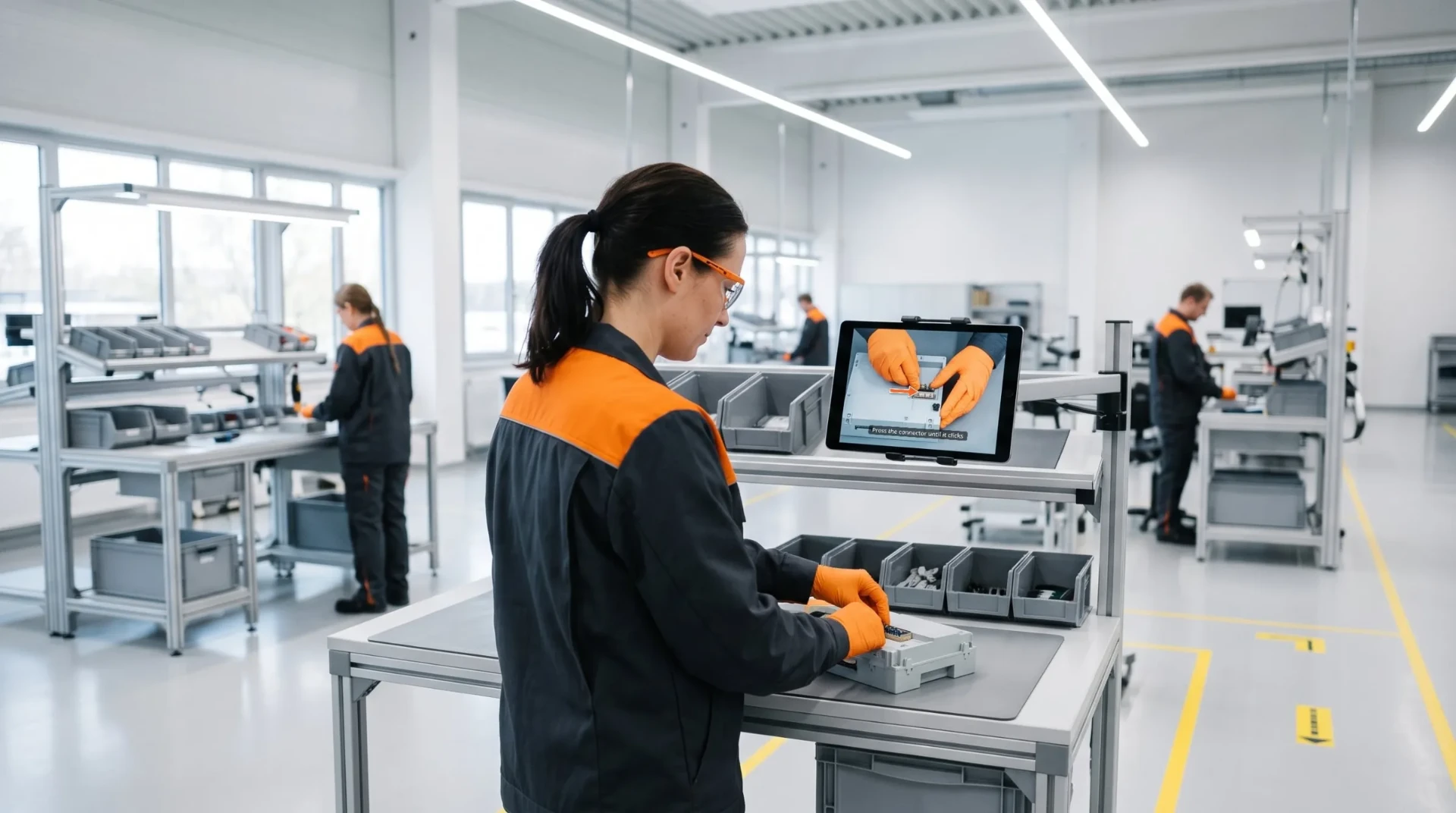
Cross-training needs to be consistent, planned, and organized. Define what makes the role successful. What will be accomplished and what knowledge and skills will be required? Be specific. The cross-trained employee should know exactly what the new work entails and what is expected. A skills matrix helps here: it shows who is qualified for which station, where you depend on one person, and who should be trained next. Short video instructions make it easier to show exactly how the work is done and what is expected from the viewer.
From there, determine if your process or steps are accurate, usually, the person in the role can validate the process. If not, then make adjustments. Like any new process, things work better after a few iterations.
The goal is to build and fine-tune a plan to consistently cross-train employees for a critical role or specific skills. This process is similar to what would occur when onboarding a new employee.
Where REWO fits
REWO Courses combines video-based guides and assessments into learning paths with pass criteria and certificates, and shows when certificates are due for renewal. The results can feed your skills matrix, so you can see who is qualified for which station.
Read next: Skills matrix for manufacturing · REWO Courses · Onboarding agency and foreign workers